Buyer's guide / Keyboards
Best gaming keyboards (2026)
Five picks for gamers -- the Hall-effect flagship, a premium wireless board, a dependable mainstream mechanical, a $40 magnetic-switch surprise, and the high-polling wireless option -- ranked from published specs and independent testing.
Last updated July 4, 2026
Gaming keyboards changed more in the last two years than in the decade before, and the reason is Hall-effect magnetic switches. Instead of a fixed press point, you set the actuation depth in software and turn on "rapid trigger" so a key re-fires the instant you lift it. The result is a board that can feel faster in twitchy games — and, thanks to brands like AULA, that technology now starts at about $40 instead of $200.
This guide is a research-led synthesis of manufacturer specifications and independent testing -- principally RTINGS, linked per pick -- plus long-term owner consensus. Setup Quarterly does not benchmark keyboards first-hand; every figure below traces to a cited source, it was produced with AI assistance as part of our research workflow, and where a board has no independent lab review we say so. Product photos are courtesy of each manufacturer.
The picks at a glance
- Wooting 80HE — Best overall.
- Lemokey P1 HE — Best wireless.
- Corsair K70 CORE RGB — Best mainstream on a budget.
- AULA WIN60 HE — Best budget Hall-effect.
- NuPhy WH80 — Best 8 kHz wireless.
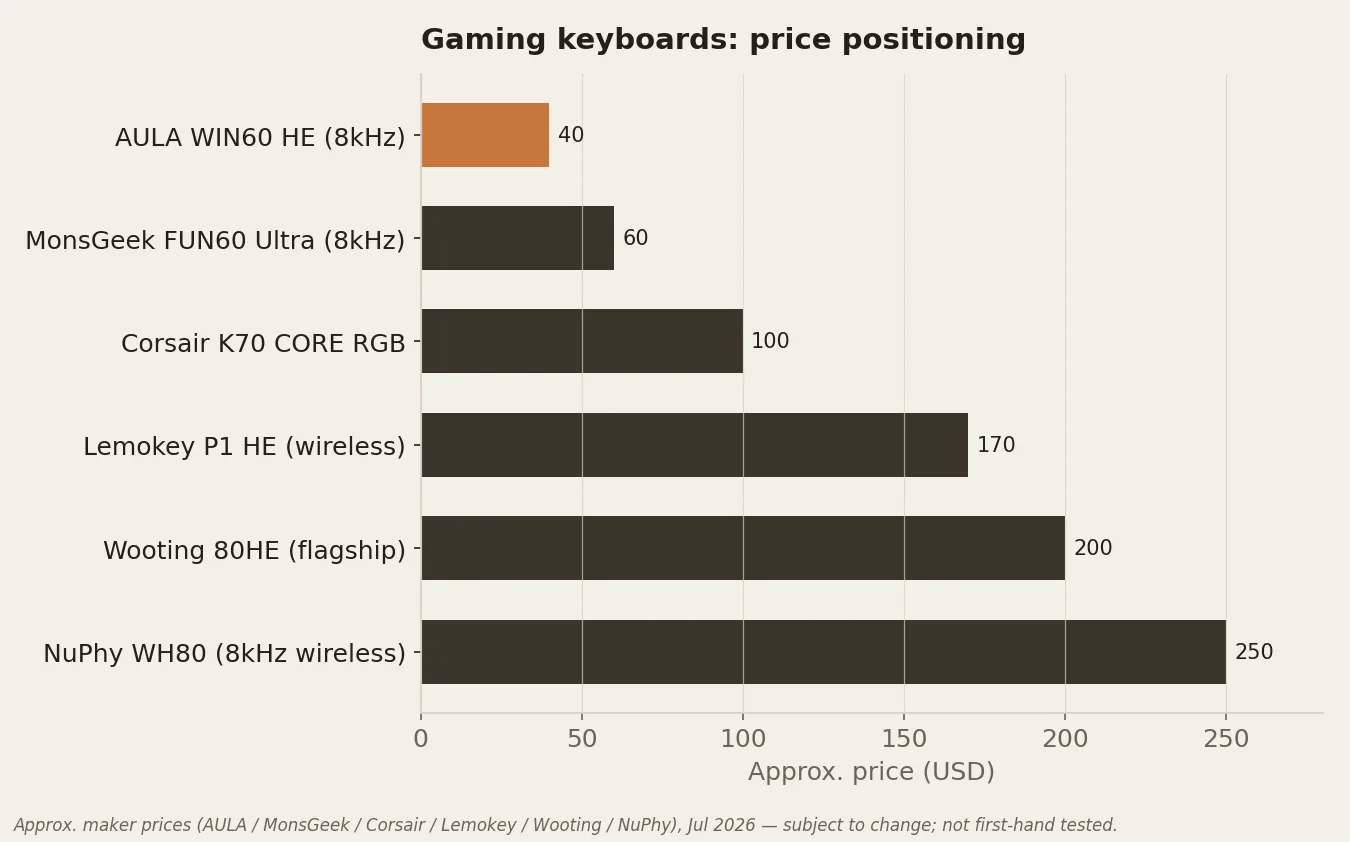
At a glance: specs compared
| Keyboard | Switch | Layout | Connectivity | Polling | Price |
|---|---|---|---|---|---|
| Wooting 80HE | Hall-effect magnetic (Lekker) — adjustable actuation 0.1–4.0mm, rapid trigger | 80% / TKL | Wired USB-C only | 8000 Hz | ~$200 |
| Lemokey P1 HE | Hall-effect magnetic (Gateron Double-Rail) — adjustable 0.2–3.8mm, rapid trigger | 75% (81 keys, knob) | Wired + 2.4GHz + Bluetooth 5.2 | 1000 Hz | ~$170 |
| Corsair K70 CORE RGB | Mechanical linear (Corsair MLX Red) — fixed actuation, no rapid trigger | Full-size (TKL variant exists) | Wired | 1000 Hz | ~$100 |
| AULA WIN60 HE | Hall-effect magnetic (Greywood / Wing Chun on Max) — adjustable 0.08–3.4mm, rapid trigger (0.02mm step) | 60% (61 keys, arrows included) | Wired only | 8000 Hz | ~$40 (base) / ~$60 (Max) |
| NuPhy WH80 | Hall-effect magnetic (Jade Dragon-N) — adjustable actuation, rapid trigger | TKL / 80% | Wired + 2.4GHz + Bluetooth | 8000 Hz | ~$250 |
Compiled from manufacturer specs and RTINGS reviews. Prices are approximate and in USD. AULA figures are manufacturer-stated (no independent lab test).
The picks in detail
Best overall
Wooting 80HE
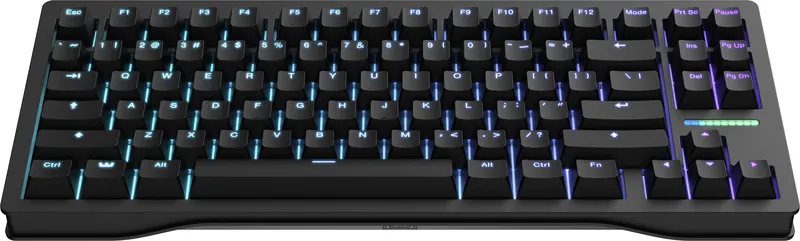
- Switch: Hall-effect magnetic (Lekker) — adjustable actuation 0.1–4.0mm, rapid trigger
- Layout: 80% / TKL
- Connectivity: Wired USB-C only
- Polling rate: 8000 Hz
- RGB: Status LED bar (subtle, not underglow)
- Price: ~$200 (approx.)
Why it's here: RTINGS' top gaming pick: outstanding build, the lowest measured latency of the group, and the best analog software (Wootility). Adjustable actuation plus rapid trigger is the reference implementation.
The catch: Wired-only, and the stiff gasket feel isn't for everyone. No QMK/VIA — it uses Wooting's own stack.
Sources: manufacturer specs · RTINGS review.
Best wireless
Lemokey P1 HE
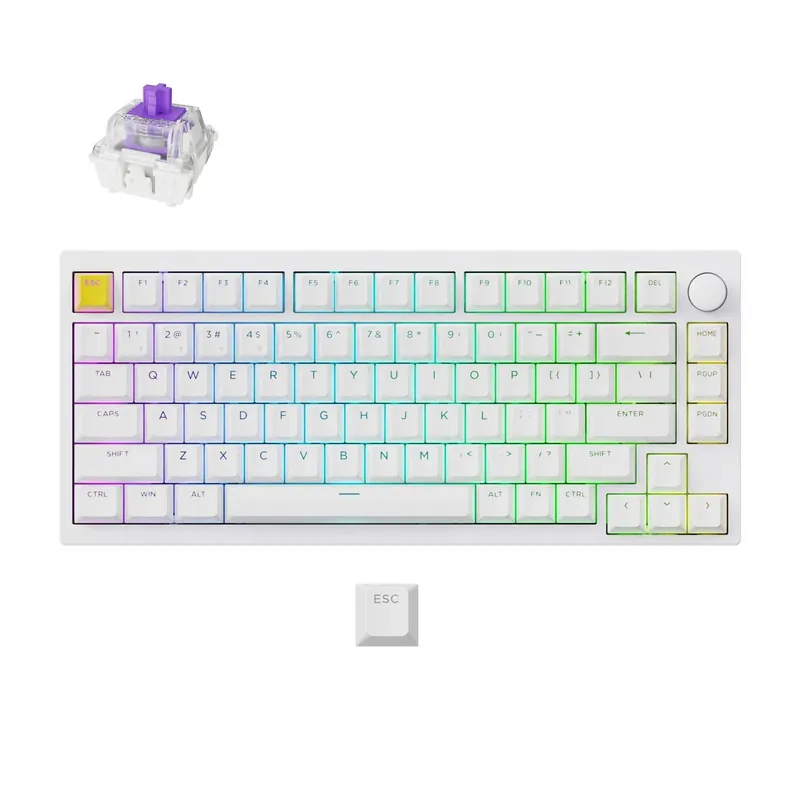
- Switch: Hall-effect magnetic (Gateron Double-Rail) — adjustable 0.2–3.8mm, rapid trigger
- Layout: 75% (81 keys, knob)
- Connectivity: Wired + 2.4GHz + Bluetooth 5.2
- Polling rate: 1000 Hz
- RGB: Shine-through per-key
- Price: ~$170 (approx.)
Why it's here: A premium 75% Hall-effect board that's genuinely wireless — RTINGS rates the build and raw performance highly, and the knob plus aluminium frame feel a tier above the price.
The catch: Polling tops out at 1000 Hz (not 8k), the analog output can be inconsistent, and hot-swap is limited to Gateron's Double-Rail magnetic stems.
Sources: manufacturer specs · RTINGS review.
Best mainstream on a budget
Corsair K70 CORE RGB
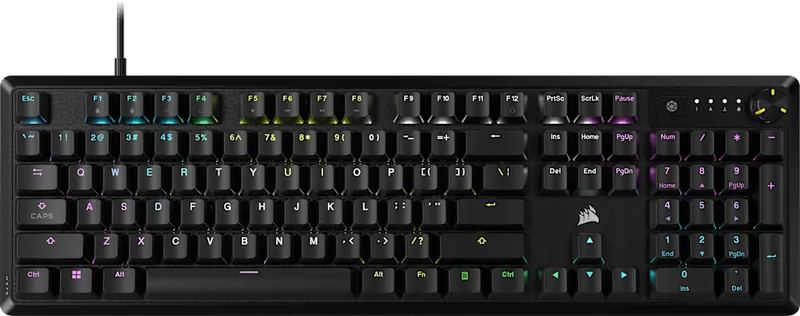
- Switch: Mechanical linear (Corsair MLX Red) — fixed actuation, no rapid trigger
- Layout: Full-size (TKL variant exists)
- Connectivity: Wired
- Polling rate: 1000 Hz
- RGB: Per-key RGB
- Price: ~$100 (approx.)
Why it's here: A sturdy, low-flex full-size board with great latency for the money — RTINGS' pick when you want a dependable mainstream mechanical rather than a magnetic-switch board.
The catch: Switches are soldered (no hot-swap), and it's a traditional mechanical: no adjustable actuation or rapid trigger, and polling stays at 1000 Hz.
Sources: manufacturer specs · RTINGS review.
Best budget Hall-effect
AULA WIN60 HE
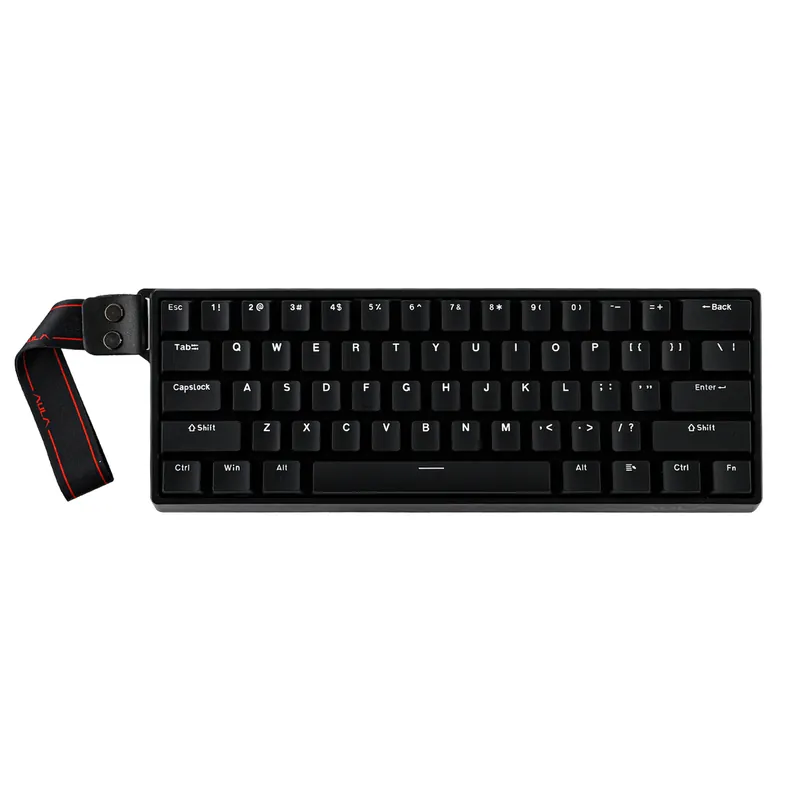
- Switch: Hall-effect magnetic (Greywood / Wing Chun on Max) — adjustable 0.08–3.4mm, rapid trigger (0.02mm step)
- Layout: 60% (61 keys, arrows included)
- Connectivity: Wired only
- Polling rate: 8000 Hz
- RGB: 16.8M-colour south-facing per-key (the visual draw)
- Price: ~$40 (base) / ~$60 (Max) (approx.)
Why it's here: The budget-Hall-effect story in one board: 8000 Hz polling, adjustable actuation and rapid trigger, and bold per-key RGB for about $40 — a fraction of the flagships.
The catch: Wired-only, Windows-only driver software, and — importantly — no independent lab review, so its latency and accuracy figures are manufacturer-stated, not verified.
Sources: manufacturer specs · no independent lab review yet — figures are manufacturer-stated.
Best 8 kHz wireless
NuPhy WH80
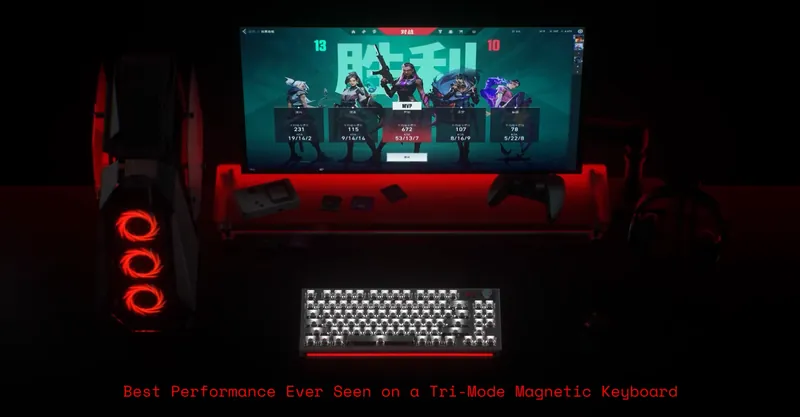
- Switch: Hall-effect magnetic (Jade Dragon-N) — adjustable actuation, rapid trigger
- Layout: TKL / 80%
- Connectivity: Wired + 2.4GHz + Bluetooth
- Polling rate: 8000 Hz
- RGB: Shine-through per-key
- Price: ~$250 (approx.)
Why it's here: A rare 8000 Hz-and-wireless combination: RTINGS notes very low latency plus multi-device 2.4GHz/Bluetooth. If you want the high-polling magnetic experience without a cable, this is it.
The catch: The most expensive pick here, the high profile really wants a wrist rest, and the analog output can be quirky.
Sources: manufacturer specs · RTINGS review.
If RGB and looks matter most: the AULA family
AULA has become one of the most popular budget keyboard brands almost entirely on the strength of striking per-key RGB at very low prices — and they keep trending. Beyond the WIN60 HE above, two more are worth a look if colour and value matter more to you than a lab-verified spec sheet. The honest caveat is the same throughout: AULA boards run AULA's own Windows-only software rather than QMK/VIA, and their Hall-effect models have not been independently lab-tested.
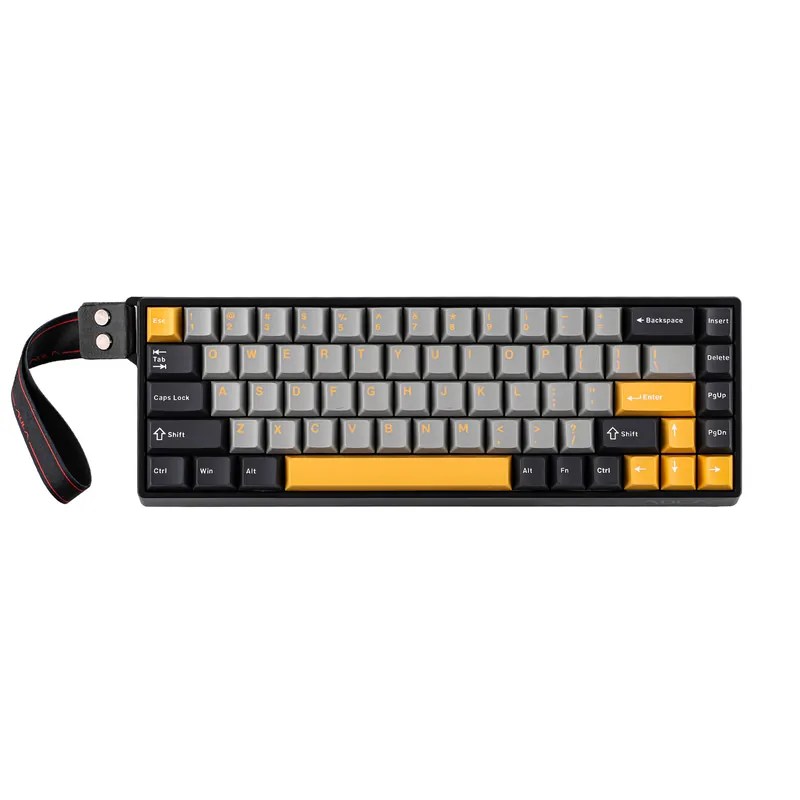
- AULA WIN68 HE — the WIN60's slightly larger sibling: a 65% / 68-key gasket board with the same Hall-effect magnetic switches, adjustable actuation and 8000 Hz polling, plus arrow and navigation keys. Bold south-facing RGB. Roughly $40–60. Check on Amazon →
- AULA F75 — the RGB board you've seen everywhere: a 75% hot-swap mechanical (not Hall-effect), tri-mode wireless, with 26 lighting effects and music sync. A looks-and-value pick rather than an esports tool. Roughly $65–80. Check on Amazon →
- AULA F87 — the same RGB recipe in a TKL layout, some versions adding a small dot-matrix screen and audio visualiser. A striking showpiece; specs vary by revision. Check on Amazon →
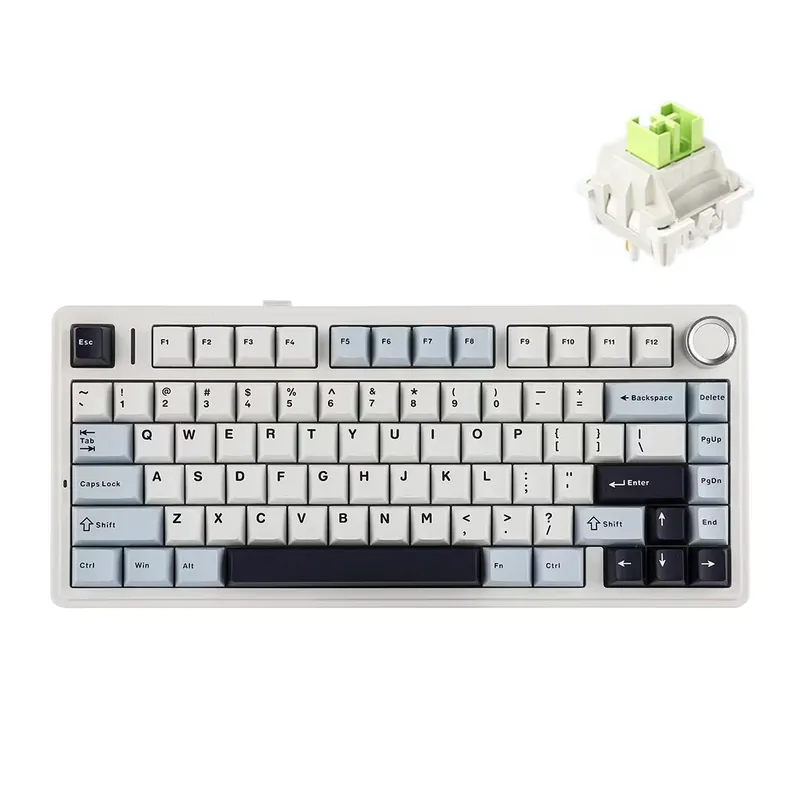
Specs from AULA's product pages. Prices approximate. No independent lab review; Setup Quarterly does not test first-hand.
Also worth considering
MonsGeek FUN60 Ultra — if you want a 60% Hall-effect board a step up from the AULA, the FUN60 Ultra pairs 8000 Hz polling and an aluminium case with RTINGS-noted strong performance for around $60. We haven't featured it with a photo above because no clean manufacturer image was available, but it's a legitimate budget-HE alternative. Check on Amazon →
Worth pairing (honest complementary picks)
These are category recommendations, not specific SKUs — genuinely useful alongside any of the boards above:
- A large XL / desk-mat mousepad — a low-friction surface for the fast mouse movements a Hall-effect board encourages, and it unifies the desk. Browse on Amazon →
- A wrist rest — most useful with the taller boards here (the Wooting 80HE and high-profile NuPhy WH80). Browse on Amazon →
- A shine-through PBT keycap set — a natural RGB upgrade for the hot-swap boards whose stock caps don't light through cleanly. Browse on Amazon →
- A coiled USB-C cable — for the wired boards, a tidier, aviator-style cable is the classic finishing touch. Browse on Amazon →
Frequently asked questions
What is the best gaming keyboard in 2026?
Based on RTINGS' testing, the Wooting 80HE is the strongest all-round gaming pick: a Hall-effect magnetic board with adjustable actuation, rapid trigger, and 8000 Hz polling, with the lowest measured latency of the group. If you want that magnetic-switch experience on a budget, the AULA WIN60 HE offers 8000 Hz polling and adjustable actuation for around $40 — with the honest caveat that it has no independent lab review yet. Setup Quarterly does not test these first-hand; this is a synthesis of published specs and independent reviews.
What are Hall-effect (magnetic) switches, and do they matter for gaming?
Hall-effect switches sense the key's position magnetically instead of with a physical metal contact. That lets you set the actuation point in software (say, a very shallow 0.1–0.5mm for fast games) and use 'rapid trigger,' where the key re-actuates the instant you lift and press again. For fast-paced competitive games this can feel more responsive than a traditional mechanical switch. For slower or single-player games the difference is smaller. The Wooting 80HE, Lemokey P1 HE, AULA WIN60 HE and NuPhy WH80 here are all Hall-effect; the Corsair K70 CORE is a conventional mechanical.
Is 8000 Hz polling actually worth it?
Polling rate is how often the keyboard reports to the PC — 1000 Hz once per millisecond, 8000 Hz eight times per millisecond. In theory 8000 Hz shaves a fraction of a millisecond off input latency; in practice most players won't feel the jump from 1000 Hz, and it needs a capable PC to sustain. It's a genuine edge for competitive/esports play and a nice-to-have otherwise — not a reason on its own to pick a keyboard. Note that a great 1000 Hz board (like the Lemokey P1 HE) can still out-feel a mediocre 8000 Hz one.
Are AULA gaming keyboards any good?
AULA has become hugely popular on the strength of striking RGB and Hall-effect features at very low prices, and owner sentiment is broadly positive. The honest caveats: their boards run AULA's own Windows-only driver software rather than open QMK/VIA, and — unlike the Wooting, Lemokey and NuPhy picks — AULA's Hall-effect boards have not been independently lab-tested, so quoted latency and accuracy figures are manufacturer-stated. Treat them as a strong value-and-looks choice rather than a lab-proven esports tool.
Wired or wireless for gaming keyboards?
Wired over USB-C still gives the lowest, most consistent latency, which is why the Wooting 80HE and Corsair K70 CORE are wired. That said, modern 2.4GHz wireless on boards like the Lemokey P1 HE and NuPhy WH80 is close enough that most players won't notice, and you gain a cleaner desk and multi-device switching. Bluetooth adds more latency and is better for typing than twitch gaming. If you play competitively, wired or 2.4GHz; if you value tidiness, 2.4GHz wireless is a safe pick.
Related guides
- Best keyboards for programming of 2026 — the same board classes, ranked for coding instead of gaming.
- Best graphics cards of 2026 — the other half of a gaming rig.
- Best mouse of 2026 — the other half of your battlestation, gaming to ergonomic.
- Keyboard switches compared 2026 — sortable data on linear, tactile, clicky and Hall-effect switches.
- GPU benchmark hierarchy 2026 — sortable performance-per-dollar.
- Best standing desks of 2026 — what the setup sits on.
Affiliate disclosure: some links above are affiliate links (Amazon
Associates, tag setupquarterly-20) — if you buy through
them, Setup Quarterly may earn a commission at no extra cost to you. We do not
accept payment for reviews, and commissions never influence a pick. See our
disclosure and methodology.